




Link - University of Michigan Health System UMHS
UMHS HOME


Guide to Radiation Therapy at UMHS


Steps that occure before therapy

Parking
Consultation
Scheduling

Steps involved in planning your therapy

CT Simulation
Simulation
Immobilization Devices
Beginning Your Treatment
Completion of Treatment
Blood Draw

Other things you may want to know

Housing in Ann Arbor
Billing and Financial Counseling
Pediatrics and Radiation Oncology
Treatment Protocols
Brachytherapy
Quality Assurance
Glossary


Parking

When you are being seen in the Radiation oncology department, you should park in our parking lot, located off E. Medical Center Drive between the cancer center and the emergency room entrances.

All patients (except those with state-issued gold parking permits) must use metered parking. Note your space number and pay at the machine located at the building entrance; please bring coins as the machine does not accept dollar bills. The cost is 60 cents/hour. Obtain a Radiation Oncology hang tag from the reception desk. This tag must be displayed in your vehicle at all times while in the Radiation Oncology parking lot.

back to top


Consultation

During the consultation, your Radiation Oncologist will examine you and reconfirm your diagnosis with the use of your x-rays, medical images and pathology. At this time, your Radiation Oncologist and Nurse will discuss your treatment plan.

back to top


Scheduling

Once it is determined you will undergo a course of radiation therapy, your simulation, or CT simulation and initial treatment time will be scheduled. Your daily treatment schedule will be made by the Therapists who treat you. They will try to schedule a time close to your preferred time. If your Therapists cannot accommodate you at first, they will change your schedule as soon as your preferred time becomes available.

It is important for you to check in at the check in station for all your scheduled appointments. If you cannot make an appointment, please notify the department staff at 734-936-4300 or 800-882-7150.

back to top


CT Simulation

Your Radiation Oncologist may request a CT (CAT scan) Simulation. It is important to note that not all patients require a treatment planning CT. A treatment planning CT is not the same as a diagnostic CT.

An immobilization device may be made and used for your CT Simulation. Either before or during the simulation you may be given an injection of a special dye that helps us to see certain organs. Your nurse or treatment team will inform you of any special instructions before your CT Simulation. All of the information from your CT will be put into our treatment planning computer system and will be used to determine the type of treatment field, energy and angle of the beam for your radiation treatments.

A treatment planning CT Simulation may take 30 to 60 minutes and is performed in the Radiation Oncology department.

back to top


Simulation

Simulation is an imitation of your radiation treatment without the actual radiation beam and it is the first step of your treatment planning process.

The simulator is an x-ray machine modeled after our treatment units. It uses fluoroscopic x-rays to visualize your internal anatomy and correctly position your treatment fields. It also has the ability to take x-rays to verify your treatment area.

It may be necessary for you to change into a gown for this procedure.

Once your immobilization device has been made, the simulator Therapist will position you using fluoroscopy (x-ray). Next, x-ray films will be taken of the area under the direction of your Radiation Oncologist. These films are checked by your Radiation Oncologist and marks will be placed on your skin and on the immobilization devices so that your position can be duplicated for each treatment session. The marks on your skin may be placed with a felt tip marker and/or tattoo ink dot. If a mask was made for you, all of the marks will be placed on the mask, not on your skin. In the simulator and the treatment room, laser beams are utilized to help confirm your precise alignment. These laser beams are not harmful to you and are just for positioning purposes.

Occasionally a liquid that can be visualized on an x-ray (called a "contrast medium") is used to assist your Radiation Oncologist in visualizing the target region or normal tissue during your simulation. You will receive instructions before the contrast is given.

Before the Therapist takes you off the table, a picture will be taken of you in your treatment position. Also pictures will be taken of your face and of the marks on your skin. These pictures are for documentation and will be put in your radiation treatment chart only.

Your simulation may take 45 to 120 minutes depending upon the area being treated and is performed in the Radiation Oncology department. A simulation may not be performed, instead a CT Simulation may be used.

back to top


Immobilization Devices

During your simulation, your Radiation Oncologist will decide if an immobilization device is needed for your treatment. Several types of immobilization devices are used including: a plastic mesh mask, a foam cradle, and a breast arm board.

Plastic Mesh Devices are made from a hard plastic that becomes very flexible in warm water. When it is wet, it conforms to the contour of the treated area. It will dry very quickly.

Foam Cradles (for the chest, abdomen and pelvis areas) are made with a liquid styrofoam that expands and hardens. As it expands, it forms to the shape of your body. While expanding the foam gets warm and as it cools it hardens.

Breast Arm Board (for the breast and chestwall areas) is made of metal and plastic. This device allows your arm to be lifted and raised away from your body. The arm board is pre-made and attaches to the treatment table.

back to top


Beginning Your Treatment

Please check in at the front desk before your treatment. If you changed into a gown for your simulation a gown will be required for your daily treatment. Lockers are available in the dressing rooms for your clothes, but locks are not provided. You may bring a padlock with you.

On your first day, the Therapists on the treatment unit will be taking more x-ray films or portal images. These are very important and will be used for comparison to the films taken during your simulation. After the films or images match perfectly, you will receive your first radiation treatment. During your radiation treatment you will not see or feel anything. Although you are in the treatment room alone, the Therapists are monitoring you through the use of an intercom and closed circuit television system.

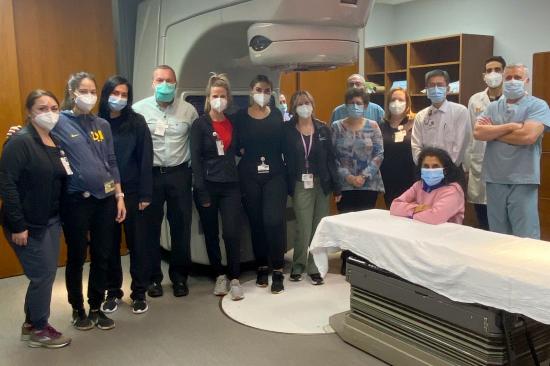
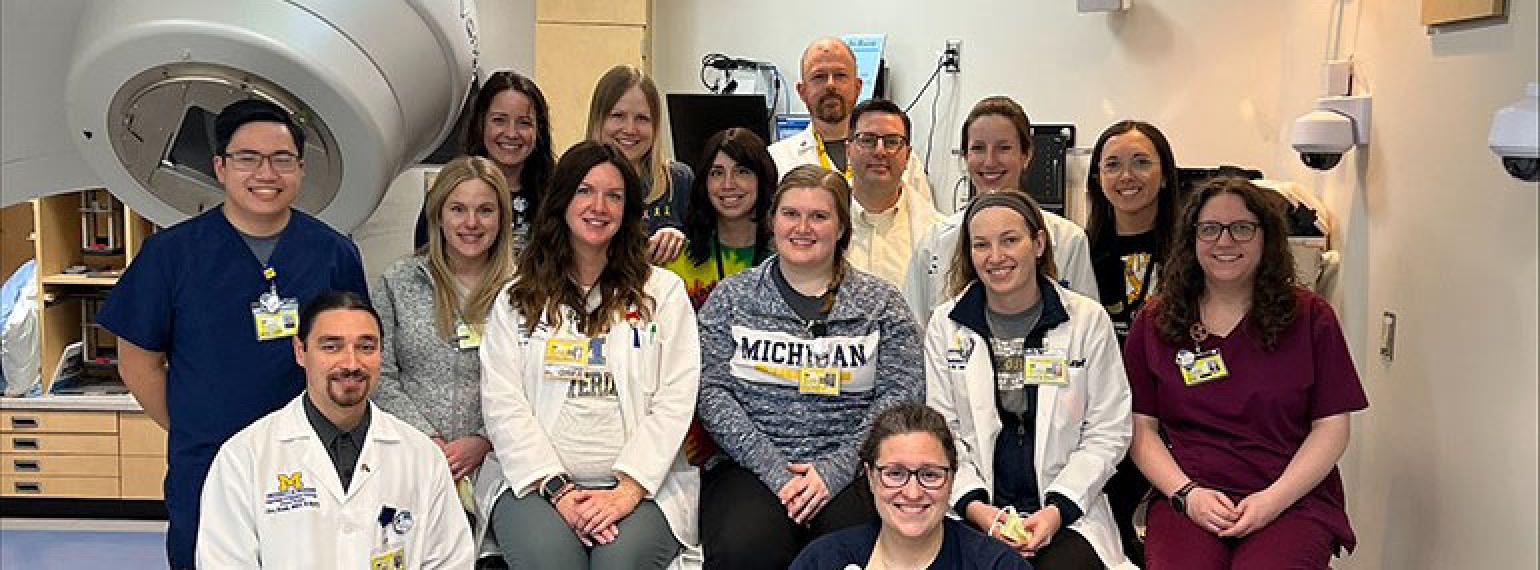
Our department has four state-of-the-art treatment units called linear accelerators. These units have the capability of performing computer controlled radiation therapy treatments. Your Radiation Oncologist will choose the most suitable unit for your treatment. The linear accelerator is a device that utilizes electromagnetic waves to accelerate charged particles through a specially designed tube that generates a powerful radiation beam.

On occasion we may have treatment unit delays or down time. If this happens, we will try to accommodate you on one of our other units. This may cause delays in our schedules. We will try to notify you of these delays. Please make sure we have a phone number where you can be reached.

Our goal is not to cancel appointments, but to try to accommodate everyone. This may not always be possible and we may have to cancel an appointment.

Unless a patient needs assistance it is preferred family members wait in the front lobby. For other patient's privacy, patients are asked to remain in the waiting rooms and not in the halls outside the treatment rooms.

Your first day of treatment may take 30 to 90 minutes. After that your daily treatment may only take 15 to 30 minutes. You will see your Radiation Oncologist once a week unless you have other problems that require their attention.

back to top


Completion of Treatment

Close to the end of your treatment course, your Nurse and Radiation Oncologist will discuss your follow up care. Please pick up your follow up schedule from the clinic desk.

Also upon your completion of treatment your Referring Physician will be sent a summary letter outlining your course of treatment.

back to top


Blood Draw
Most patients will need to have their blood drawn at least once during their course of treatment. A complete blood count (CBC) is drawn which measures white blood cells that fight infection, red blood cells that carry oxygen and platelets that help clot blood. The frequency of blood draws is dependent upon the area of the body being treated. Whenever possible your blood will be drawn in the radiation oncology department. Ask your nurse for more information.

back to top


Housing in Ann Arbor

For those patients and family members that travel longer distances to receive treatment at University Hospital, there are housing options available. The Med-Inn is a hotel located within the University of Michigan Medical Center. For reservations (required) and information regarding Med-Inn, call (734) 936-0100. Some local hotels offer our patients and families special rates on a daily or weekly basis. For more information regarding these hotels, call our Social Worker at (734) 936-8700.

Wilmot House is a two story, four bedroom house located within one-half mile from the hospital and is available to adult (18 or older) outpatients of the Department of Radiation Oncology. You must live 50 miles or more one way from the University Hospital and not be wheelchair dependent or need more assistance than your companion can provide. Wilmot House has community style living.

Each guest has a room that contains two twin beds. There is one bathroom for every two guest rooms. The fully furnished common living areas include a large living room with a TV and stereo, a kitchen (including dishes and cooking utensils), laundry facilities, and parking. No smoking or alcoholic beverages are allowed in the House. If you do not have your own transportation to your radiation appointments or need more information on tours, rates and reservations, call the Social Worker at (734) 936-8700 or stop by the Social Worker's office while you are in the clinic.

The Ronald McDonald House is a home away from home for ill children and their families. There is usually a waiting list and patients are placed on the list based on several criteria, including severity of the injury/illness, financial need and inpatient or outpatient care being received. There are 29 bedrooms and 15 bathrooms with community style living. There are staples and some food provided in the kitchen. Each family unit is assigned a chore to help keep the house clean. There are age appropriate play areas, a pool table, electronic games, TVs and a stereo in the community living areas of the house. For more information or reservations, call the Ronald McDonald House at (734) 994-4442.

back to top


Billing and Financial Counseling

The Radiation Oncology Billing Office submits claims for services to insurance companies, government programs (i.e. Medicare and Medicaid) or any other appropriate payer indicated by you. The billing office personnel will verify the completeness of necessary billing forms and supply all the necessary information for the payers to process and pay the claim. Please bring with you any referrals or authorizations which your insurance company requires in order to make payment for services.

During the first week of your radiation treatment a Financial Counselor may meet with you. The Financial Counselor will discuss your insurance benefits relating to radiation therapy and answer any questions you may have relating to balances for which you are responsible. Also, at that time you will receive a general explanation of the billing process at the University of Michigan Medical Center. A Financial Counselor is available in the clinic one day each week. Please ask for details.

back to top


Pediatrics and Radiation Oncology

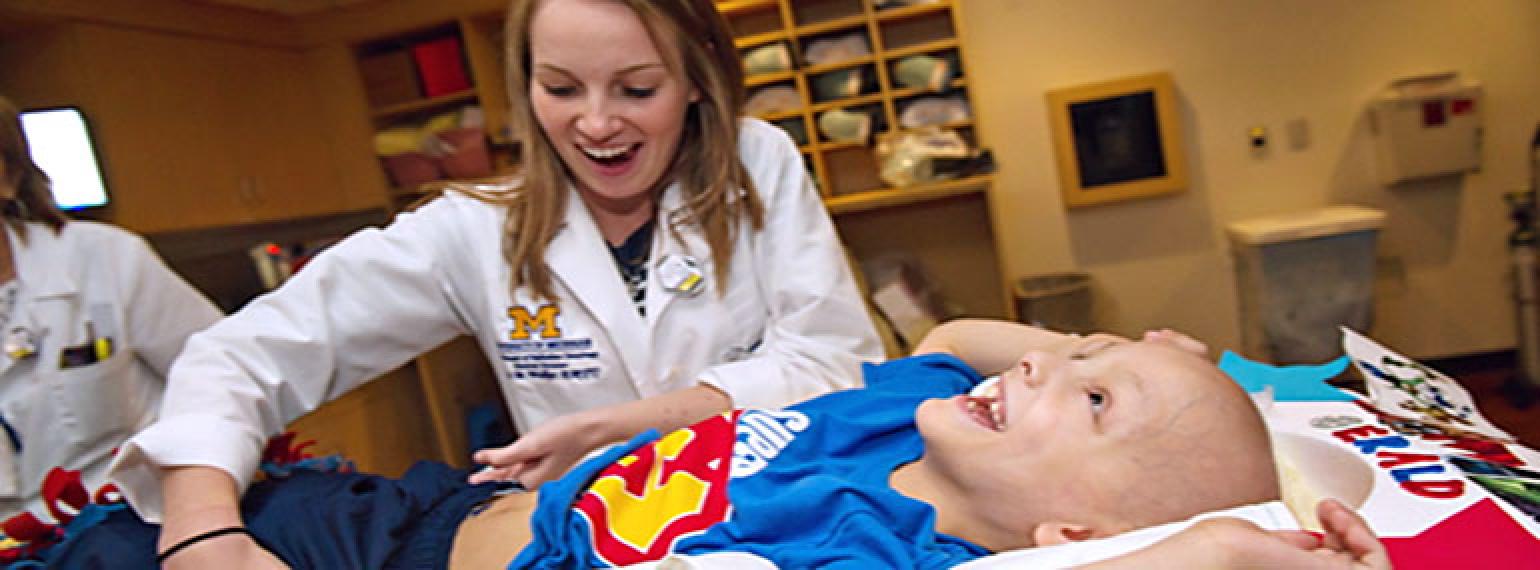
Children of all ages are treated here at the University of Michigan Medical Center. Some children, particularly infants, may need to be sedated or anesthetized for treatments and treatment planning appointments. Whenever possible, we will work with your child, through the use of play therapy, to obtain her/his cooperation without the use of medications. We also encourage children to bring security objects such as stuffed animals, blankets or cassette tapes with their favorite music, stories or a parent's voice to help ease their fear.

Also to help ease your child's fear of the radiation treatment we would recommend a tour that can be scheduled before they begin their treatment. In addition it may be possible for your child to meet the Therapists that will be treating them.

While your child is having their radiation treatment, it would be appreciated if parents would wait in the waiting areas and not the hall. This is requested for the other patients privacy.

If there is ever a concern that needs to be addressed, the Manager of Operations will be happy to discuss it with you.

back to top


Treatment Protocols

In addition to providing state-of-the-art radiation therapy, the Radiation Oncology Department is involved in research. Occasionally, we may ask patients to participate in treatment protocols. These are specific treatment plans designed with the intention of improving therapy or decreasing side effects. When the protocol is active, we will not know whether the potential improvement exists. In fact, there may be some risks associated with protocols. Your Radiation Oncologist will explain both potential risks and benefits in detail with you and obtain your written permission before starting you on a research protocol.

back to top


Brachytherapy

Brachytherapy is a specialized form of treatment that is used to treat only specific areas. Radioactive sources are placed or inserted in your body. The most common materials used are Cesium 137, Iridium 192 or Iodine 125. This treatment can be used to give the area of disease more dose or may be the only form of treatment given. This type of therapy allows radioactive sources to be placed directly into a tumor which means high dose to the tumor and low dose to normal tissue.

This treatment may require a hospital stay. If you are to have this type of treatment your Radiation Oncologist will thoroughly explain the details to you.

back to top


Quality Assurance

Great measures are taken to assure the accuracy of your treatment. These measures include chart rounds, port films and unit checks.

"Chart rounds" is a weekly meeting where all the charts of patients currently under treatment are reviewed by Radiation Therapy personnel. Calculations, documentation, doses, films and database information are all rechecked to ensure that all parts of your treatment are accurate and up to date. In addition, this meeting is a time to communicate your progress and any changes in your treatment plan. Your Radiation Oncologist, Resident, Nurse and Therapists attend this meeting.

Port films are taken approximately every five treatments to continue to verify your treatment. Your port films are always checked by your Radiation Oncologist, Resident and Therapists.

Your treatment unit has routine daily checks as well as weekly and monthly checks. Measurements are also verified by the Medical Physicist.

back to top


Glossary
Biotherapy
treatment by stimulation of the body's immune defense system

CAT Scan
(Computerized Axial Tomography) form of X-ray that obtains "3-D" pictures of the area of interest within the body

Chart Rounds
weekly meeting where reviews of all patient charts under treatment are conducted by Radiation Therapy personnel

Chemotherapy
treatment with anti cancer drugs

Contrast Medium
a liquid that assists the Radiation Oncologist in visualizing the target region or normal tissue during your simulation

Diagnostic
a procedure to investigate or reveal an abnormality within the body

Fields
direction in which the area is being treated

Immobilization Device
device to assist you in maintaining the same position for each treatment

Linear Accelerator
machine that uses high power X-Rays to give the treatment dose

Oncology
the study of tumors

Palliate
to relieve symptoms

Pathology
the study of diseases

Port Films

X-Rays that verify the treatment area

Post-operatively

after surgery

Pre-operatively
before surgery

Protocol
treatment plans designed with the intention of improving therapy or decreasing side effects


back to top


How to Make an Appointment

What is Radiation Oncology

Questions about Radiation Therapy

Our Treatment Specialists

Guide to Radiation Therapy at UMHS


U-M Medical School
| Hospitals & Health Centers | U-M | TEXT-ONLY

University of Michigan Health System
1500 E. Medical Center Drive  Ann Arbor, MI 48109   734-936-4000
(c) copyright 2008 Regents of the University of Michigan
Developed & maintained by: Public Relations & Marketing Communications
Contact UMHS

U.S. News: America's Best Hospital 2007
The University of Michigan Health System web site does not provide specific medical advice and does not endorse any medical or professional service obtained through information provided on this site or any links to this site.
Complete disclaimer and Privacy Statement
 

UMHS HOME

Health Topics A-Z

For Patients & Families

For Health Professionals

Search Tools & Index