
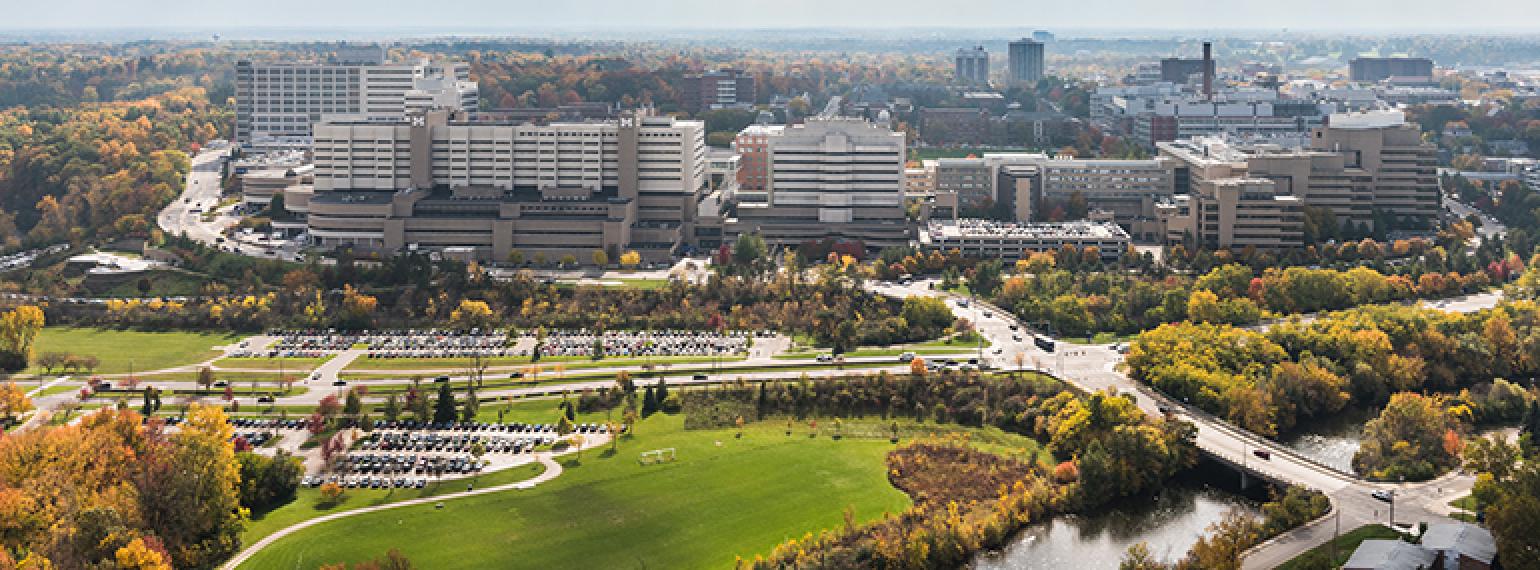
C. S. Mott Children's Hospital

University of Michigan Health System

Critical Care and Emergency Medicine

Neonatal Intensive Care Unit

Residents spend 3-4 months in the 40 bed Level III Holden NICU.  More than 3,500 deliveries per year offer ample opportunities for residents to gain experience in the resuscitation and stabilization of acutely ill newborns.  Acuity varies from cases like those typically seen in community settings to cases requiring extensive subspecialty consultation and cutting-edge therapies.  The unit hosts a Brain Research and Innovative Neurological Care for Newborns (BRAIN) Program, Extracorporeal Membranous Oxygenation (ECMO) treatment, complex cardiac and pediatric surgery, and other innovative therapies.  A fetal surgery center enables high-risk fetuses and their families to be managed prenatally, through delivery, and postnatally, at the same facility.  About 20% of the patients are transported to the unit – often from other Level III facilities because of the need for specialized diagnostic and therapeutic interventions not available elsewhere.

A resident focused curriculum includes procedure labs, patient simulation, and structured conferences.  Residents are the primary providers of care in the ICU – always under the supervision of faculty and fellows.  The faculty and fellows are dedicated to ensuring that residents are competent and confident in their neonatal skills and are committed to ensuring a supportive environment and appropriate autonomy.

Pediatric Critical Care

The Pediatric Intensive Care Unit is medical-surgical unit of sixteen beds which provides a family-centered and multidisciplinary approach to care.  The PICU has an international reputation for its use of extracorporeal life support (ECLS) in cardiac and respiratory failure and for continuous renal replacement therapies (CRRT) in children with life threatening renal failure and other diseases.  Rotations in the pediatric intensive care unit provide residents with a thorough exposure to critically ill children.  Faculty members are all board-certified critical care specialists.  Through direct, supervised patient care and a didactic curriculum, trainees become familiar with indications for admission, the capabilities and limitations of invasive and non-invasive monitoring, indications and use of mechanical ventilation, transplantation, and artificial organ support of the renal, cardiac, respiratory, metabolic, and hepatic organ systems.  Trainees are introduced to the ethics of intervention in the care of the critically ill.  Principles for coping emotionally and professionally with personal stress, bereavement, and the families of critically-ill children are emphasized.

Pediatric Emergency Department

The University of Michigan Emergency Department is a Level I trauma center with fixed wing, helicopter, and ground transport.  A wide catchment area, diverse patient population, and high patient volume guarantee a wide variety of cases from routine “bread and butter” pediatrics to multiple trauma, and complex, challenging medical problems.  There is a formal curriculum that includes procedure labs, simulation utilizing a Human Patient Simulator, and structured conferences.  The Pediatric Emergency Department is a recently-renovated distinct physical space separate from the adult ER.  Residents work directly with fellowship trained, board-certified, specialists in pediatric emergency medicine who are available 24-hours per day, seven days a week to ensure the best possible training in pediatric emergency skills.  Residents spend 4-5 months in the Pediatric Emergency Department.