|
|
There
are many causes of vaginal bleeding in pregnancy. Some result
in bleeding early in pregnancy, while others result in bleeding
later.
Usually
slight bleeding will stop on its own. Sometimes, though,
bleeding may become serious and pose a risk to you or your
fetus. You should call your health care provider
or seek medical advice if bleeding occurs.
Early Pregnancy:
Late Pregnancy:
Taking Action
Many
pregnant women have vaginal spotting or bleeding in the first
12 weeks of pregnancy. If you are having vaginal bleeding
in early pregnancy, your health care provider may perform
a pelvic exam. A blood test may be done to measure human
chorionic gonadotropin (hCG), a hormone produced
during pregnancy. As the pregnancy progresses, hCG levels
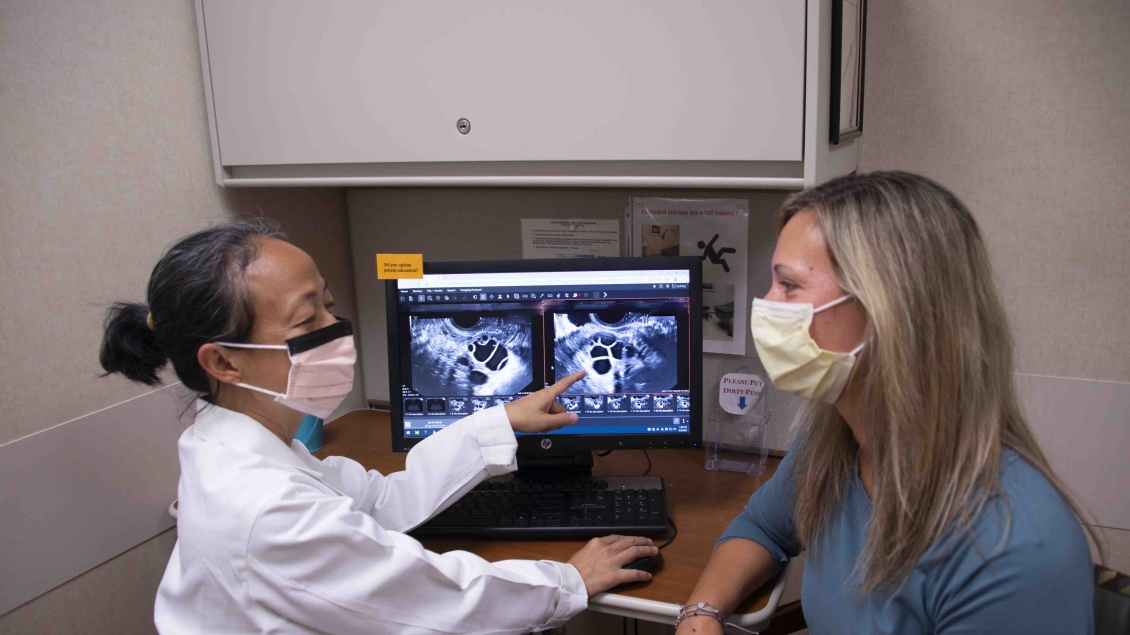
increase, so you may have more than one test. Ultrasound may
be used to find the cause of the bleeding. Sometimes
the cause is not found. If you have bleeding during pregnancy,
you may need special care because you have a higher chance
of going into labor too early (preterm
labor) or having an infant who is born too small.
Miscarriage
Bleeding
may be alarming, but it doesn't mean that miscarriage the
loss of a pregnancy in its early stages is
certain. About half of the women who bleed do not
have miscarriages.
If there
is a problem with the pregnancy, fetal death usually
results in the passage of tissue, and the pregnancy ends. Miscarriage
can occur at any time during the first half of
pregnancy, but most occur during the first 12 weeks. At least
20%
of all pregnancies end in miscarriage.
If you
have vaginal bleeding, have cramping pain that is
felt low in the abdomen, or pass tissue through the vagina,
there is a chance of miscarriage. Many women who have vaginal
bleeding have little or no cramping. Sometimes the bleeding
stops and pregnancy goes on. At other times the bleeding
and cramping continue, become stronger, and miscarriage
occurs. This pain is usually stronger than menstrual cramps.
If you
think you have had a miscarriage, bring any tissue
you have passed to the health care provider's office so that
it can be examined. If you have had a miscarriage
but some tissue remains in the uterus, bleeding often continues.
If this happens, the tissue may be removed by a surgical
procedure called dilation and curettage (D&C).
This may involve dilating, or widening, the cervix
(mouth of the uterus)
and gently scraping tissue away from the lining of
the uterus (the endometrium). The tissue also may
be removed
by suctioning. This is called suction curettage.
Most
miscarriages cannot be prevented. They are often
the body's way of dealing with a pregnancy that was not growing
normally. Usually,
having a miscarriage doesn't mean that you can't
have more children or that anything is wrong with your health.
There
is no proof that physical
activity or sex during pregnancy cause miscarriage.
If you have two or three miscarriages in a row, however,
your health
care provider may suggest that some tests be
performed to look for a possible cause.
back to top
Another
problem that may cause bleeding in early pregnancy
is ectopic pregnancy. This is when pregnancy occurs outside the uterus,
usually in a fallopian
tube. Pelvic pain
and vaginal bleeding may result. The tube may burst, and
there may be internal bleeding as well. Blood loss may cause
weakness, fainting, or even shock. A ruptured ectopic pregnancy
requires prompt treatment.
Ectopic
pregnancies are much less common than miscarriages.
They occur in about 1 in 60 pregnancies. Women who have had
an infection in the tubes (such as pelvic inflammatory
disease) have an increased risk. Women who have
already had an ectopic pregnancy or have had previous tubal surgery
are also at higher risk.
A very
rare cause of early bleeding is molar
pregnancy. It is also called gestational trophoblastic
disease (GTD) or simply a "mole." It results
in the growth of abnormal tissue, rather than an
embryo. It may
require treatment with suction curettage or with
drugs.
Late
Pregnancy
The causes
of bleeding in the second half of pregnancy are different
from those in early pregnancy. Common conditions causing
minor bleeding include inflammation of or growths on the
cervix.
Bleeding
can also be serious and pose a threat to the health of the
woman or the fetus. It may require treatment in a hospital. Heavy
vaginal bleeding usually involves a problem with the placenta
(afterbirth), the tissue that connects the mother and fetus.
The two most common causes are placental abruption and placenta
previa. Preterm labor can also cause vaginal bleeding.
If
the placenta becomes detached from the uterine wall before
or during labor, vaginal bleeding may occur. Only 1% of pregnant
women have this problem, which usually occurs during the
last 12 weeks of pregnancy. Abdominal pain often occurs,
too, whether or not there is obvious bleeding. When the placenta
becomes detached, the fetus can get less oxygen. This can
be dangerous. Women who have already had children,
are over 35, have had abruption before, or have sickle cell
anemia are at higher risk. Placental abruption has
been linked to:
-
High
blood pressure
-
Blows
or other injuries to the abdomen
-
-
Smoking
When
the placenta lies low in the uterus, it can
partly or completely cover the cervix. In the third trimester,
this may be linked
to vaginal bleeding. This is called placenta
previa. It is serious and requires prompt
care.
Placenta
previa occurs in only 1 woman in 200.
It is more common in women who have had more than one child,
who
have had
a cesarean birth or other surgery on
the uterus, or who are carrying twins or triplets. Bleeding
is usually
painless.
back to top
Late
in pregnancy, vaginal bleeding may also
be a sign of labor. When
the mucus plug that
covers the opening of the uterus during
pregnancy is passed before or at the start
of labor, a small amount of mucus
and blood is passed from the cervix.
This is called "bloody show." It
is common and not a problem if it happens
within a few weeks of your due date. If
it happens earlier, you may be going
into preterm labor and
should talk to your health care provider right away. Other
signs of preterm labor include:
-
Change
in type of vaginal discharge (watery, mucous, or bloody)
-
Increase
in amount of vaginal discharge
-
Pelvic
or lower abdominal pressure
-
Change
in intensity or type of backache
-
Abdominal
cramps, with or without diarrhea
-
Regular contractions or
uterine tightening
Taking
Action
Contact your
health care provider if you have bleeding in late pregnancy.
You may need to be admitted to the hospital to find its cause. Ultrasound may
be advised. On occasion, a woman may have to stay in the hospital
for several weeks. A woman who is bleeding late in pregnancy
may need a blood transfusion. Conditions causing bleeding in
late pregnancy pose a risk to both mother and fetus. They
may be serious enough to require early delivery of
the baby, sometimes by cesarean
birth.
Finally
...
Many women
with bleeding in pregnancy are found to have minor conditions
that need no treatment. At other times, bleeding can be the
first sign of a serious problem. For this reason, it is very
important that bleeding anytime in pregnancy--early or late--be
reported to your health care provider. Your health and that
of your baby may depend on getting prompt treatment.
back
to top
|
| |
|
 |
|
 |